"What Should I Wear with These Pants?" — AI Styling Has Come a Long Way
"What Should I Wear with These Pants?" — AI Styling Has Come a Long Way
Three years ago, who would’ve thought you could ask an app, "I have a business casual meeting tomorrow and a client dinner later—what should I wear?" AI styling has moved beyond simple recommendations; it has entered a stage where it understands and interacts with your closet.

From Recommendations to Conversation, and Conversation to Visualization
The evolution of AI styling can be broken down into three major stages.
The Era of Recommendations (2015–2020) — "People who bought this item also bought..." Sound familiar? This method, known as collaborative filtering, was primarily used by online shopping malls. The problem was clear: the AI had no idea what clothes you already owned or where you were headed the next day. It lacked context.
The Era of Conversation (2022–Present) — The game changed with the rise of Large Language Models (LLMs). "I have a cafe meeting in the morning and a client visit in the afternoon—recommend an outfit centered around navy pants." AI can now understand these natural language requests and curate combinations using items already in your closet. Acloset’s AI styling, which generates outfits based on your actual inventory, is a prime example of this.
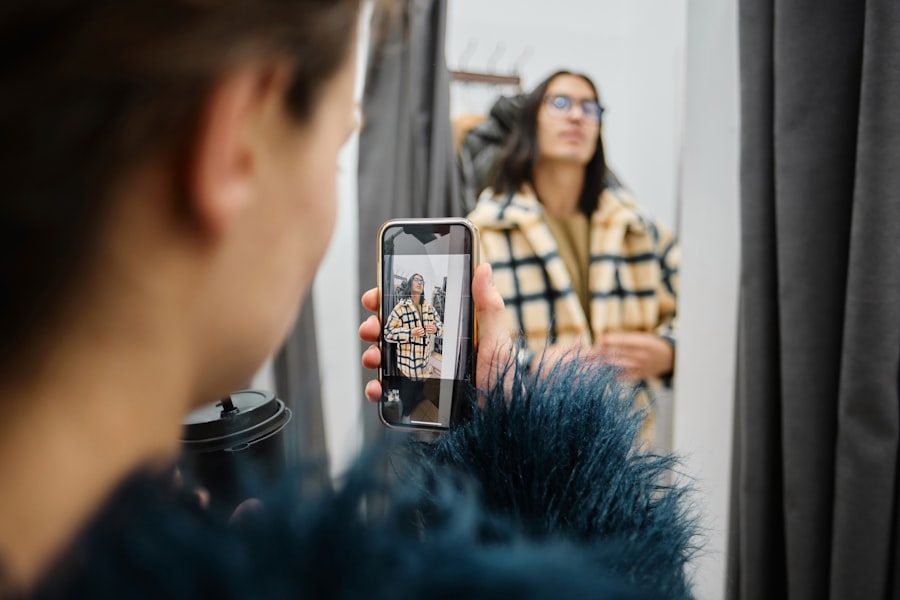
The Era of Virtual Try-Ons (2024–Present) — Taking it a step further, generative AI can now overlay clothes onto your photo. You can actually see a preview of "How would this blouse look on me?" before you even get dressed.
While these stages developed sequentially, they are now merging into one seamless experience. You describe the situation, the AI finds the perfect combo from your closet, and then shows you how it looks on your body. Just three years ago, this was a scene straight out of a sci-fi movie.
However, there is one crucial distinction to make here.
AI for You vs. AI for the Platform
Even if two services both call it "AI recommendations," the results can be vastly different depending on who the AI is working for.
For a shopping mall AI, the data source is their inventory. The goal is to drive sales. Therefore, the better the recommendation, the more you end up buying. Conversely, for a digital closet AI, the data source is the clothes you already own. The goal is to maximize utility. The better the recommendation, the more you wear what you already have.
This isn't to say shopping mall AI is bad. However, you should be aware of the conflict of interest. Since platforms profit when you buy more, their algorithms are naturally optimized to make you hit that "buy" button.
A digital closet AI doesn't have this conflict. Its sole purpose is to help you make the most of your existing wardrobe. Once you understand this difference, you can use both types of AI wisely—mall AI for shopping, and closet AI for styling your OOTD.
What AI Does Well (and What It Still Can’t Do)
Let’s be honest: AI styling isn’t magic.
What it’s great at: Rule-based matching (e.g., navy + white), detecting wear patterns ("This user prefers formal looks on Mondays"), personalization through learned preferences, and being available 24/7.
What’s still a challenge: Emotional context, like "I’m feeling a bit down today and want an outfit to boost my mood." It also struggles with the nuances of fabric texture and drape that you can only feel in person, or subtle cultural judgments like "Is this outfit a bit much for this specific occasion?"
The bottom line is this: AI is a tool, but the final decision always belongs to your personal sense of style. When the AI suggests three outfits, it’s up to you to pick the one that fits "today's you." By leaving feedback with a simple thumbs up or down, you help the AI make its next recommendation even more accurate.
When you set up this relationship correctly, AI styling becomes more than just a tool—it becomes a partner that helps evolve your style. But to get the most out of it, you need a little preparation.
How to Use AI to Its Full Potential in 10 Minutes
For an AI to give good recommendations, it needs to know your closet. Just like the saying "garbage in, garbage out," high-quality data leads to high-quality results.
First, digitize at least 80% of your closet. If your registration rate is low, the AI’s options are limited, and the quality of the outfits will inevitably drop.
Second, tag your items accurately. Color, Category, material, and season. Just getting these four right will noticeably boost the AI’s accuracy.
Third, log your OOTDs for at least 30 days. The AI learns from your wearing patterns. Without data, it can only give generic advice. Once it has 30 days of data, it starts giving recommendations truly customized to "you."
And most importantly—be specific about the Occasion (TPO). "Give me an outfit recommendation" will never be as good as "A cafe meeting tomorrow morning, business casual, centered around navy pants." The more detail you give the AI about your situation, the better the result.
❓ FAQ
Q: How many items do I need to register to use AI styling effectively?
A: We recommend registering over 80% of your wardrobe. You generally need at least 30 items registered to see meaningful outfit recommendations.
Q: What should I do if I don’t like the AI recommendations?
A: Leave feedback! Use the like/dislike buttons. Specific feedback like "The colors are too dark" or "Make it more casual" is incredibly helpful for improving AI accuracy.
Q: How is Acloset’s AI Styling different from shopping mall AI?
A: Acloset recommends outfits based on clothes you already own, helping you reduce unnecessary spending. Shopping mall AI is designed to encourage you to buy new products.
References & Sources:
- McKinsey & Company, "The State of Fashion 2024: Technology Edition"
- Google (2024), "Virtual Try-On with AI"
- Deldjoo, Y., et al. (2022), ACM Computing Surveys
Published by the Acloset Magazine Team.
Start Organizing Your Closet
Dress better, buy less — with Acloset.