That '800' on Your Puffer Jacket Label Isn't a Temperature Rating
That '800' on Your Puffer Jacket Label Isn't a Temperature Rating
You're shopping for a winter puffer and spot "800 Fill Power" on the tag. The jacket next to it says "600." Naturally, you assume 800 is warmer and grab it. Turns out, that number alone doesn't tell you how warm you'll actually be.
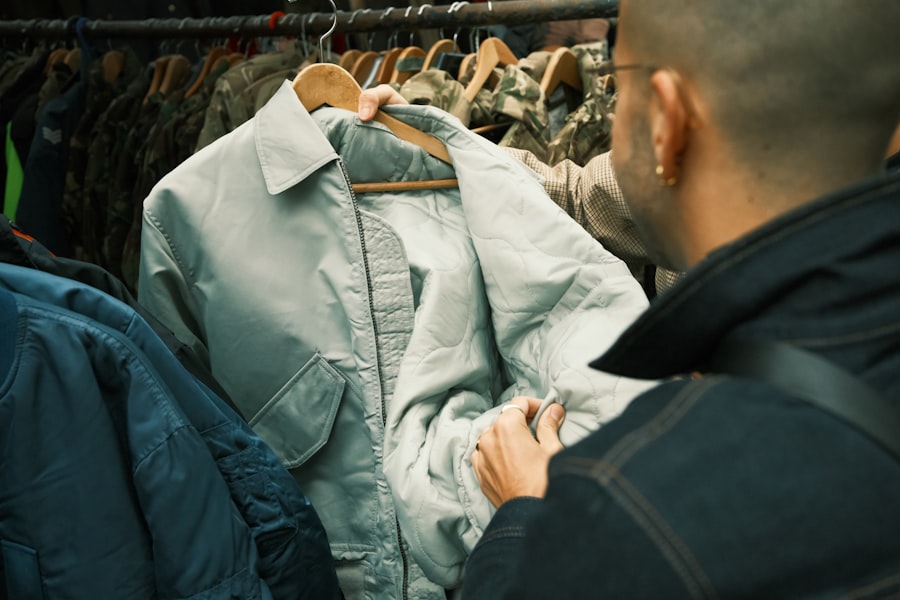
Fill Power Isn't a Measure of Temperature
Let's break down what that number actually means.
Fill power measures the volume (in cubic inches) that one ounce of down occupies when fully lofted. A 600 fill power down means one ounce fills 600 cubic inches, while an 800 fill power down occupies 800 cubic inches.
At the same weight, 800-fill down lofts more, traps more air, and keeps you warmer than 600-fill. It's also lighter and packs down smaller. Going from 700 to 800 fill power gives you roughly a 14% increase in volume per ounce.
Looking at it this way, "higher is always better" seems to make sense. But that's only half the story.
Look for the Second Number
A jacket's real warmth isn't determined by fill power alone. It's the combination of fill power and fill weight—the total amount of down packed inside.
Here's an easy example to see why this matters:
Imagine an ultralight jacket filled with just a tiny pinch of 800-fill down versus a hefty, thick parka packed with plenty of 650-fill down. The first jacket boasts a bigger number on the tag, but on a freezing winter night, the second one will keep you much warmer.
So, a higher fill power doesn't automatically mean "warmer." It means "the same warmth at a lighter weight." If you need something packable for your backpack, high fill power is the way to go. If you're looking for a commute coat for waiting on freezing platforms, fill weight is just as essential.
That said, there's one condition that can completely change the game.
The Moment It Gets Wet, Everything Changes
Down has one major kryptonite: moisture.
When untreated down is exposed to persistent dampness, it loses its loft—its fluffiness. Once it collapses, it can't trap air, and its insulating power plummets. Fill power alone won't tell you how a jacket handles wet weather. Always check for water-repellent down treatments, as well as waterproof shell fabrics and seam construction.
This is where synthetic insulation shines. According to outdoor retailer REI, synthetic fill retains its insulating properties even when wet. Wool is another great alternative, known for natural breathability and temperature regulation.
Here is the bottom line: Ask "where will I wear this?" before "how warm is it?"
If you live somewhere dry and bitterly cold, high-fill-power down is a clear winner. If you're in a rainy, snowy city and don't always carry an umbrella, prioritize water-repellent down or synthetic blends. Your local winter forecast might actually be more important than the number on the tag.
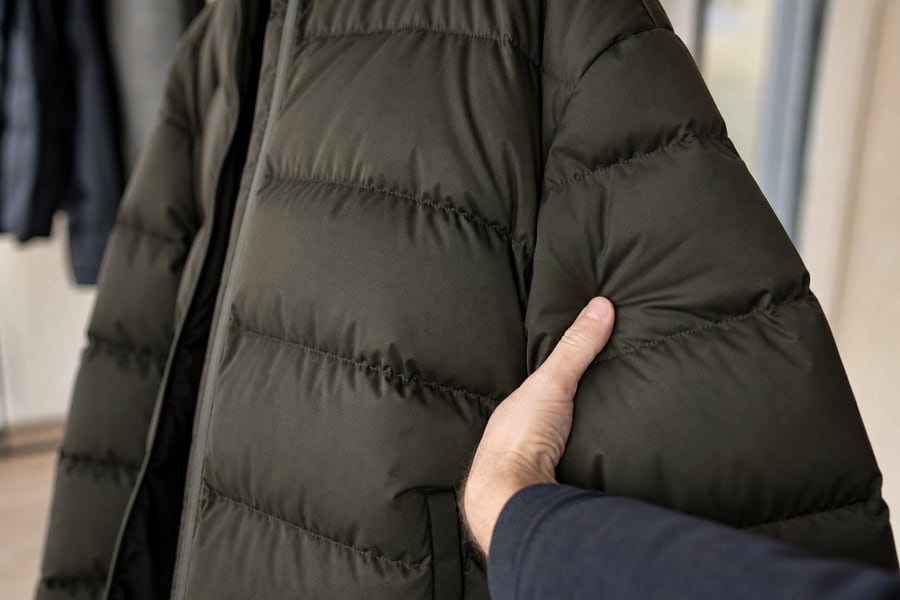
One More Tag to Look For
Beyond the numbers, there's another crucial label to check: RDS (Responsible Down Standard).
Managed by Textile Exchange, this certification ensures that the down and feathers come from animals treated with high animal welfare standards, with a fully traceable supply chain. It strictly prohibits live-plucking and force-feeding—though it doesn't necessarily mean a shopper can trace the down back to an individual farm from the tag alone.
Keep in mind, this isn't a performance spec; it's a mark of animal welfare and supply chain traceability. Use fill power and fill weight to judge warmth, and look for RDS to ensure responsible sourcing.
The 3-Minute In-Store Checklist
1. Check both fill power and fill weight. If a brand doesn't list the fill weight, that in itself is telling.
2. Check for water resistance. Is the down hydrophobic, or does the outer shell feature a DWR (Durable Water Repellent) coating?
3. Look for the RDS certification.
4. Consider your local winter climate. Are you dealing with dry snow, slushy rain, or constant indoor-outdoor transitions?
5. Do the math on cost per wear. If you wear a winter coat 60 times a season over 3 years, that's 180 wears. A $300 coat comes down to under $1.70 per wear. If that number feels worth it, go for it; if not, keep looking.
Log your purchase info, fill power, and fill weight as notes in Acloset, then track your wears. By the end of the season, your stats will show you whether it was the right investment.
❓ FAQ
Q: Is a higher fill power always better?
A: Not necessarily. Fill power measures volume efficiency, but real warmth depends on fill weight too. If you need something lightweight and packable, go for high fill power; if maximum warmth is your priority, pay close attention to fill weight.
Q: Should I choose down or synthetic insulation?
A: For dry, freezing climates, down is ideal. For wet, snowy weather or high-output activities, synthetic is more reliable. For everyday city commuting, water-resistant down or a hybrid blend is a versatile bet.
Q: How can I manage my outerwear in Acloset?
A: Save the purchase info and fabric specs in your item notes and log your daily wears. By the end of the season, you can easily evaluate your purchase using cost per wear.
References & Sources:
- Patagonia, "Down Fill Power Explained"
- REI Expert Advice, "Down vs. Synthetic: Which Insulation Is Right for You?"
- Textile Exchange, "Responsible Down Standard (RDS)"
Published by the Acloset Magazine Team.
Start Organizing Your Closet
Dress better, buy less — with Acloset.