Why "Give Me an Outfit Idea" Always Disappoints — How to Talk Fashion with AI
Why "Give Me an Outfit Idea" Always Disappoints — How to Talk Fashion with AI
"Style an outfit for me." Ask AI like this, and you’ll usually get a pretty generic answer. And generic means it works for anyone—which also means it doesn't really work for you. The problem isn't the model; it's the prompt.
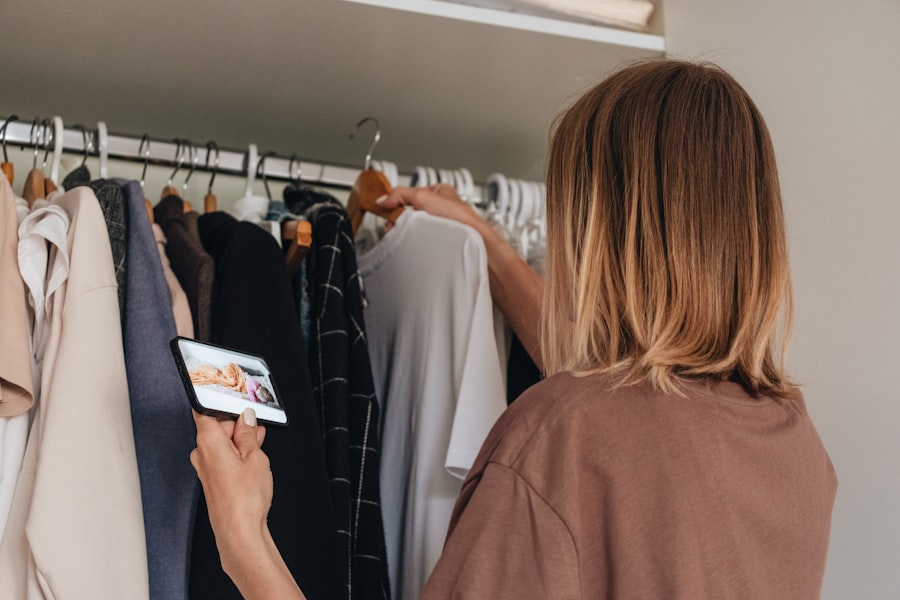
Empty Prompts Lead to Generic Looks
What happens when you ask a human stylist, "What should I wear?" They don't just hand you an answer. They ask back: "Where are you going?"
This is precisely the core issue repeatedly highlighted in conversational recommender systems research. User inputs naturally come in underspecified, and a crucial capability of such systems is asking clarifying questions to fill in the missing pieces. Helping users refine their queries throughout the dialogue is essentially part of the system's job.
The real issue is that many platforms simply answer without asking follow-up questions. When information is lacking, they default to an average, safe recommendation. And looking at the result, we quickly jump to conclusions: "AI styling just isn't that good."
So, what missing pieces should you actually provide?
The Anatomy of a Great Styling Prompt
Fashion recommendation research shows that specific attributes like fabric and fit, visual cues conveying silhouette and vibe, and core color palettes can be remarkably effective. While not an absolute formula for every platform, they serve as a practical checklist for refining your prompts.
Translating the research into everyday fashion terms gives us four key elements:
First, the Occasion. When, where, and with whom. "Tomorrow morning" and "Saturday night" call for entirely different aesthetics.
Second, the Silhouette. What key piece anchors the look? Simply stating "built around navy trousers" cuts down the options by half.
Third, the Color Palette. You don't need to specify every shade. Often, just mentioning what to avoid is enough—like "no black or white."
Fourth, the Mood. How do you want to look and feel? "Subtle and polished" or "effortless yet put-together." Without this, the final result falls flat.
Include these four elements, and even a two-sentence prompt becomes crystal clear. On the flip side, leaving out essential context almost guarantees a lackluster outfit.
That said, even the best-crafted prompt won't work under certain conditions.
Data Comes Before Prompts
AI can only work with the clothes you've actually added to your Closet.
If only half your wardrobe is uploaded, even the most detailed prompt will yield half-baked results. Even if the perfect piece is sitting in your real-life closet, the AI has no idea it exists.
What's even trickier is mislabeled tags. If a knit sweater is categorized as a "jacket," a well-phrased prompt will generate a precisely incorrect Outfit. That's often worse than having no guidance at all.
So there is a clear order of operations: first, digitize a solid portion of your wardrobe; second, do a quick check on your tags and categories; and third, fine-tune your prompts. Reversing this order means no matter how smart your prompt is, your results won't improve.
Once your digital closet is set, let’s craft the perfect prompt.
4 Ready-to-Use Styling Prompts
Here are plug-and-play templates tailored for different scenarios. Just swap in your own Items.
Work & Office
Team meeting tomorrow morning, client dinner in the afternoon. Business casual.
Style around navy slacks, jacket required. Keep the tones understated and polished.
Travel
Rome in March, highs around 18°C/64°F and lows around 9°C/48°F. Visiting two cathedrals, so shoulders and knees must be covered.
5-day capsule that fits in a single carry-on.
Wedding Guest
Indoor wedding reception this Saturday evening. Exclude black and white.
Below-the-knee length, styled to match my beige heels.
Date Night
Casual wine bar this Friday evening. Minimal walking.
Effortless yet put-together vibe. Style around my existing leather jacket.
Each prompt is only two or three sentences, yet captures Occasion, silhouette, color palette, and mood seamlessly.
One Extra Sentence Makes All the Difference
Want to take your styling to the next level?
When you get a recommendation, try asking: "Why did you pick this combination?" Hearing the AI's reasoning reveals what context you might have missed. If it says, "To match an autumn color palette," it means the AI guessed the season because you didn't specify it. Explicitly adding that detail next time will make your future recommendations far sharper.
And whenever you don't love the result, try adding exclusions. "Exclude looks I wore last week" or "No knitwear for the top." Filtering out what you don't want opens up far more fresh combinations than constantly adding new rules.
Try pasting these templates directly into the Acloset AI Stylist and simply swap the Item names. Save the looks you love as an Outfit, and tweak your next prompt with a few preferences or exclusions.
The AI wasn't failing to understand—we just weren't giving it the full story.
❓ FAQ
Q: Do longer prompts always get better results?
A: Context matters far more than word count. Occasion, silhouette, color, and mood make a great checklist—starting with just two focused sentences covering the essentials is more than enough.
Q: Why does the AI keep suggesting similar outfits?
A: Try adding a negative condition or exclusion. Constraints like "skip what I wore last week" or "avoid this color" are great for unlocking brand-new outfit possibilities.
Q: What's the best way to ask for recommendations in Acloset AI Styling?
A: Copy and paste the prompt templates from this article and simply swap in your own Items. Save your favorite results to your Outfit book, and refine subsequent prompts with exclusions or specific vibes.
References & Sources:
- ACM Computing Surveys, "A Survey on Conversational Recommender Systems"
- ACM Transactions on Intelligent Systems and Technology, "Analysing Utterances in LLM-Based User Simulation for Conversational Search"
- Fashion and Textiles (Springer), "LLM-generated content-based explanations for user experience in fashion recommender systems"
Published by the Acloset Magazine Editorial Team.
Start Organizing Your Closet
Dress better, buy less — with Acloset.