I Just Tied My Apron Ribbon on the Right—An Oktoberfest Tracht Guide
I Just Tied My Apron Ribbon on the Right—An Oktoberfest Tracht Guide
You’re in an Oktoberfest tent in Munich, holding a cold beer in your rented dirndl. Suddenly, a local Bavarian woman smiles and asks, "Your ribbon is on the right? Are you married?" Oops—that bow you tied without a second thought actually means "I’m taken" in this part of the world.
Tracht is Not a Costume
Every year from late September to early October, Munich’s Oktoberfest draws about 6 million visitors. Seeing the crowds dressed in traditional Bavarian Tracht, it’s only natural for tourists to think, "Should I try wearing one, too?"
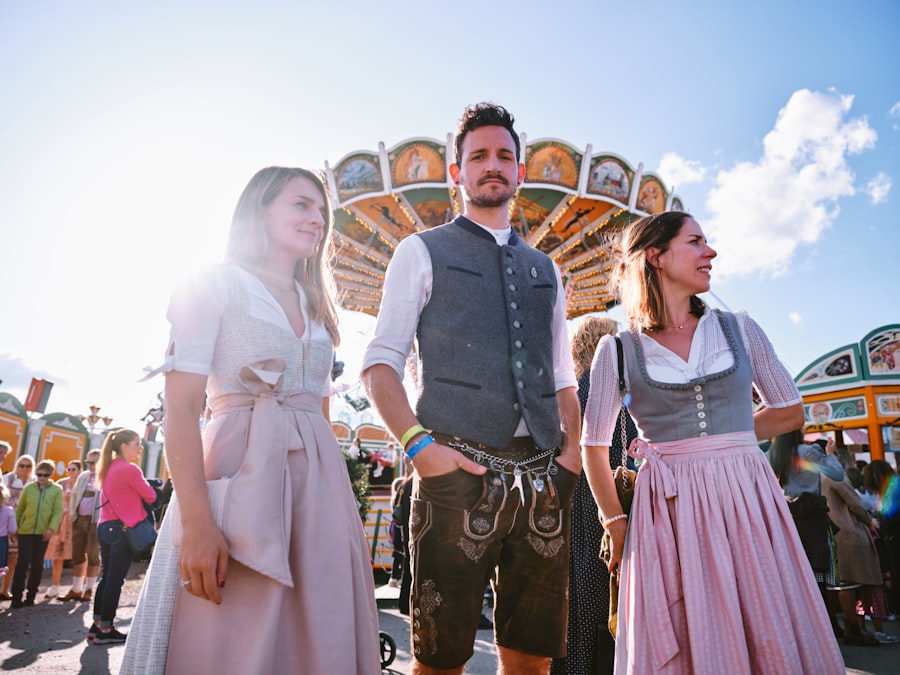
But here’s one thing you should know: to Bavarians, Tracht isn't a Halloween costume. It’s an everyday garment for family events, church services, and local festivals—a true expression of cultural pride. It’s a sartorial tradition that has been passed down through the Alpine region for centuries.
For women, the Dirndl consists of a blouse, a bodice, a full skirt, and an apron. For men, Lederhosen are characterized by deer or chamois leather trousers, often adorned with suspenders and intricate embroidery.
And the Dirndl has a hidden language of its own—the position of the apron ribbon.
The Language of the Bow—Left, Right, or Center
Where you tie your Dirndl apron ribbon carries a specific traditional meaning regarding your relationship status.
Left — Single. It signals that you’re open to a friendly approach. Right — Married or in a committed relationship. Center Back — Widowed, or a sign that you are a waitress.
If a tourist ties it randomly without knowing this, they might be sending an unintended message. When in doubt, tying it on the left is the safest bet.
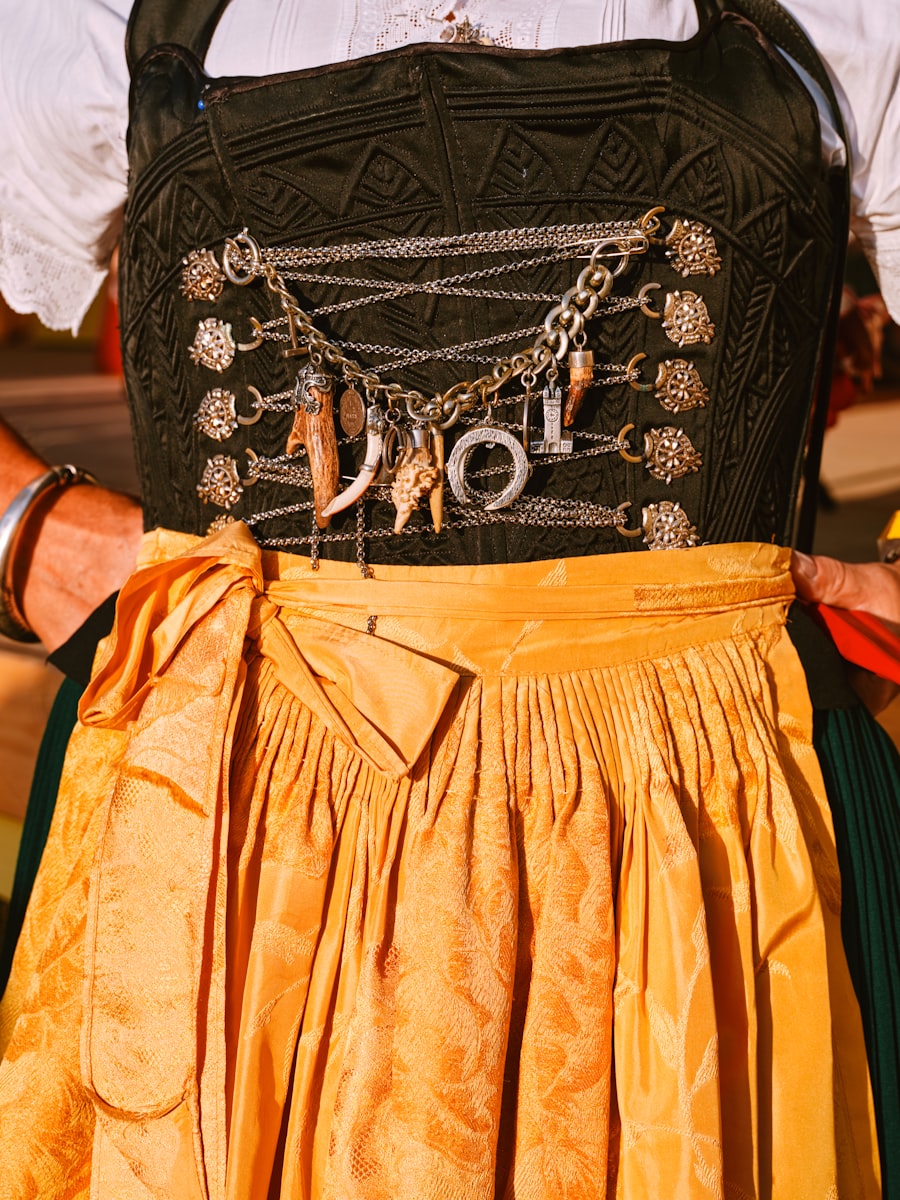
While this might seem like a minor detail, it’s quite significant to locals. Every element of Tracht—the embroidery patterns, the buttons on the bodice, the fabric of the apron—tells a story of a specific region and its heritage. Knowing these details changes how you experience the festival.
So, where can a visitor get their hands on authentic Tracht?
Skip the €10 Party Costumes
There are plenty of Tracht rental shops in downtown Munich catering to tourists. A Dirndl set usually ranges from €40–€80, while a Lederhosen set goes for €50–€90. Prices spike during the festival, so it’s best to book early in September.
The most important thing to look for is the material. Those "Bavarian costumes" sold online for €10—shiny polyester with flimsy stitching—are instantly recognizable as fakes. To Bavarians, these can feel like a caricature of their culture. You're better off wearing your regular clothes.
Opt for cotton blends or better, and ensure the Dirndl bodice fits snugly while still allowing you to breathe. For Lederhosen, make sure the thighs feel comfortable when you sit down.
Footwear matters, too. Pairing Tracht with sneakers can throw off the whole look. For women, low-heeled leather shoes look best; for men, traditional Haferlschuh style shoes are the way to go.
Dressing the part makes you feel like a true part of the celebration. But putting it on is only the beginning—how you act in it matters just as much.
Tracht Etiquette: The Don’ts
It’s tempting to strike exaggerated poses for the 'gram once the festival spirit hits. However, wearing traditional clothing while making mocking gestures or overly rowdy poses can be seen as cultural disrespect by locals.
Similarly, altering a Dirndl skirt to be extremely short or wearing the bodice without a blouse is generally frowned upon. Excessive modifications can give the impression of a lack of respect for the traditional dress.
If you want to take a close-up photo of a local’s Tracht, always ask for permission first—especially if children are involved. A polite "May I take a photo with you?" is usually met with a friendly yes.
When posting on social media, adding a quick note about the cultural significance of the Tracht rather than just calling it a "beer fest cosplay" makes for a much better record of your trip.
Ultimately, wearing Tracht at Oktoberfest isn't just about the "experience"; it's about sharing a culture. If you know where to tie your ribbon, care about the quality, and mind your manners, locals will be the first to raise a glass and offer a toast. That is the true spirit of Oktoberfest.
❓ FAQ
Q: Do I have to wear Tracht to enter Oktoberfest?
A: No. Wearing Tracht is not mandatory. You are welcome to enter in your everyday clothes. However, if you want to fully immerse yourself in the festival atmosphere, renting is highly recommended.
Q: What happens if I tie my Dirndl ribbon on the wrong side?
A: While locals rarely point it out directly, remember that the right side means 'married' and the back-center means 'widowed.' To avoid any awkward misunderstandings, tying it on the left is your safest move.
Q: How can I manage my festival look with the Acloset app?
A: You can save the rental shop name, price, and your size in your digital Closet for future reference. If you buy any local accessories as an Item, register them in the app to see how they can add a unique touch to your everyday Outfit.
References & Sources:
- Bayerischer Trachtenverband, "History of Bavarian Tracht"
- Lonely Planet, "Oktoberfest Survival Guide," 2024
- Munich Tourism Office, "Traditional Costume Rental Guide"
Published by the Acloset Magazine Team.
Start Organizing Your Closet
Dress better, buy less — with Acloset.