Navratri: The Festival Where the Calendar Tells You What Color to Wear
Navratri: The Festival Where the Calendar Tells You What Color to Wear
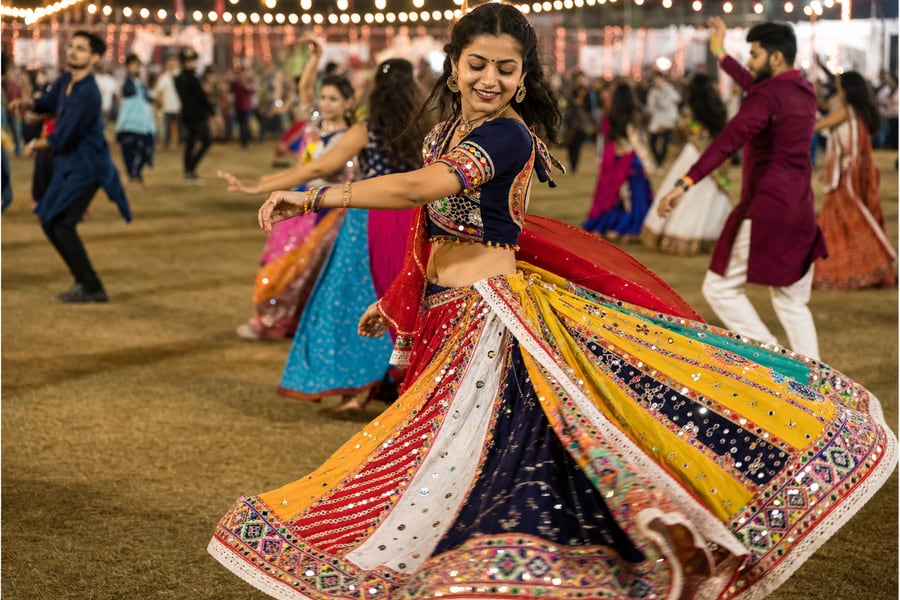
On the first night of the festival, thousands of people were dancing in massive concentric circles in the square. But one detail immediately caught the eye: almost everyone was wearing the designated color of the day. And the next night brought an entirely different shade.
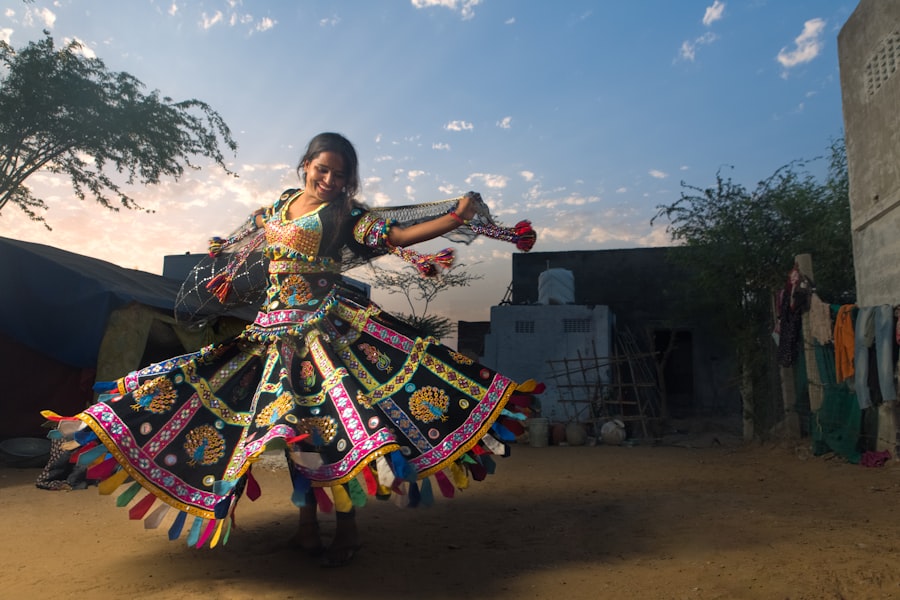
Nine Nights, Nine Colors
Navratri translates to 'nine nights' in Sanskrit. In 2026, Sharad Navratri begins on October 11 and runs through October 19, culminating in Dussehra (Vijayadashami) on October 20.
There is a tradition linking each of the nine nights to a specific goddess and color, with many regions and events sharing daily color guides in advance. That is why you will see entire plazas transformed into seas of a single hue.
One thing worth noting beforehand: the sequence of colors changes from year to year and varies across different regions and traditions. A quick online search will bring up multiple, differing schedules. For that reason, this guide avoids prescribing a fixed sequence. The most reliable way is simply checking what the locals are wearing once you arrive.
Because the exact order is not what matters most—the meaning behind dressing in unison is the true heart of this festival.
A UNESCO-Recognized Dance and Regional Attire
At the center of Navratri nights is the dance known as Garba. Originating in Gujarat and now celebrated across India, Garba was officially inscribed on UNESCO's Representative List of the Intangible Cultural Heritage of Humanity in December 2023 during the 18th Intergovernmental Committee session in Kasane, Botswana—marking India's 15th inscription.
UNESCO's description of Garba is particularly striking. While introducing it as a ritualistic and devotional dance performed over the nine nights of Navratri to honor the divine feminine energy, or Shakti, it highlights something deeper:
Garba fosters social equality by diluting rigid socio-economic, gender, and religious divisions, strengthening community bonds by welcoming and engaging diverse and marginalized communities alike.
Understanding this context changes how you view the gathering entirely. Thousands of people wearing the same color and spinning in unison are doing so for reasons that go far beyond aesthetics.
Garments Designed for Spinning
Look closely at the attire worn by Garba dancers, and functionality immediately takes center stage.
Women traditionally wear a chaniya choli, composed of three pieces: an expansive flared skirt designed to blossom like a flower with every spin, a fitted top called a choli, and a dupatta adorned with bandhani tie-dye or intricate mirror work (abhala). Men wear traditional garments such as the kediyu paired with dhoti or churidar.
That wide, sweeping skirt is not purely decorative—it is engineered to create a striking silhouette through continuous spinning motions. The mirror embroidery works the same way: catching the evening lights and scattering reflections across the floor with every turn.
In other words, these outfits are not made just for display; they are engineered for hours of continuous spinning. For visitors, this is the single most important styling note to keep in mind.
Color Is an Invitation, Not a Rule
This is perhaps the most welcoming aspect of the festival.
Guidelines for matching colors and participation requirements vary by region and venue. If an event provides a daily color guide, dressing to match can definitely enhance your sense of belonging, but traditional attire or specific colors are rarely mandatory entry requirements.
If it is your first time attending, check the organizer's notes regarding dress codes, footwear policies, and photography guidelines. And if you are there simply to watch rather than dance, comfortable casual wear is completely fine.
Building the Nine Colors From Your Own Closet
Renting traditional attire is always an option, but it is certainly not a requirement. Simply coordinating the color is more than enough.
Keep tops solid and bold. The day's color is most prominent on your upper body. If your closet lacks a top in that exact shade, a solid scarf or a lightweight shawl styled like a dupatta does the trick.
Choose wide, lightweight bottoms. You will be on your feet and moving for hours. Anyone wearing restrictive bottoms usually ends up sitting down within the first hour.
Follow the venue's footwear policy. Rules on removing shoes or what types of footwear are permitted on the dance floor vary by location.
Opt for jewelry with movement. Accessories that truly stand out during Garba are not the rigid pieces that look pretty while still, but the dynamic ones that catch the rhythm of your turns.
Try running color filters through your digital Closet in Acloset. You will instantly see how many of the nine festival colors you already own—most people find they have more than half ready to go. Fill any gaps with a simple scarf, map out your festival Outfit plans by date in advance, and you will never have to stress about what to wear each evening.
❓ FAQ
Q: Can international visitors participate in Garba?
A: It depends on the specific event and venue. Many public celebrations welcome visitors warmly, but always check the organizer's guidelines first. If joining in, it is best to start on the outer circles to learn the steps without disrupting the flow of experienced dancers.
Q: Is it necessary to rent traditional attire?
A: Not at all. Comfortable clothes matching the day's color are completely fine. That said, because the dance involves continuous spinning for hours, loose and lightweight bottoms will make your experience much more comfortable.
Q: How can I plan my festival outfits with Acloset?
A: Use the color filter to scan your Closet and see what colors you already have at a glance. Pre-assigning your Outfit plans by date eliminates any morning styling dilemmas throughout the entire festival.
References & Sources:
- UNESCO, "Garba of Gujarat," Representative List of the Intangible Cultural Heritage of Humanity, 2023
- Incredible India, "Navratri and Garba" / relevant event organizer guidance
Published by the Acloset Magazine Team.
Start Organizing Your Closet
Dress better, buy less — with Acloset.