Those Two Little Lines Under Your Sweater: What Care Labels Actually Mean
Those Two Little Lines Under Your Sweater: What Care Labels Actually Mean
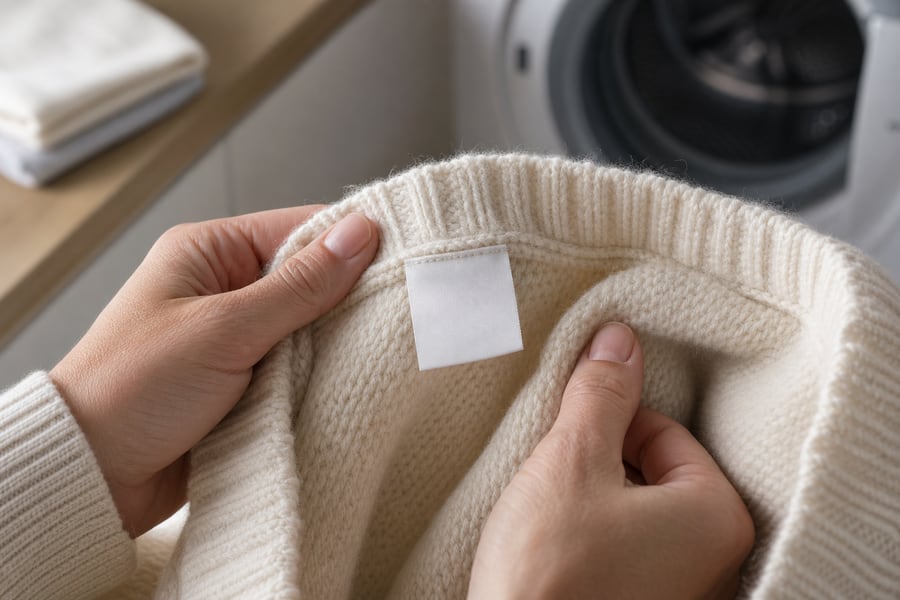
I took out my favorite cashmere sweater for the first time this October and tossed it into the wash on the delicate wool cycle. It came out looking like it belonged to a toddler. When I finally checked the tag, there were two short horizontal lines under the washbasin symbol. I had no idea what they meant until it was too late.
Global Symbols Are Great, but the Label's Text Rules First
Those tiny hieroglyphics tucked inside your clothes are easy to ignore. But brands don't just draw whatever they feel like.
Care symbols following the ISO 3758 and GINETEX standards are widely used around the world. However, international standards aren't universally mandatory across every country and manufacturer. You'll often see a mix of local guidelines and written brand instructions. If the icon and the written text seem to conflict, always prioritize the specific written instructions on the label.
There are five basic symbols to know:
The washbasin stands for washing, the triangle for bleaching, the square for drying, the iron for ironing, and the circle for professional cleaning. That's the core system—everything else is just a variation. While it might look like a lot to memorize, almost all laundry disasters come down to just one detail.
What a Single Line Under the Basin Changes
You're probably familiar with the numbers printed inside the washbasin symbol: that's the maximum water temperature you shouldn't exceed. If it says 30, keep it at or below 30°C (around 85°F).
But have you ever noticed the horizontal bars underneath that basin?
One horizontal bar means a mild wash cycle with reduced mechanical action. Two horizontal bars mean an extra-gentle cycle—essentially, a delicate wool-grade wash with minimal agitation.
This is where most cashmere tragedies happen. You might have dialed the temperature down, but you missed the spin cycle and drum friction. Even in cold water, high-speed drum rotation causes delicate fibers to tangle, felt, and shrink dramatically.
You can read the rest of the care symbols using the same logic. An open triangle means any bleach is fine, two diagonal lines inside allow only non-chlorine (oxygen) bleach, and a triangle crossed out with an X means no bleach whatsoever.
There's another symbol that trips people up just as often.
Letters Inside a Circle Aren't Meant for Home
You’ve likely spotted circles containing letters like P, F, or W.
These are strictly for professional cleaners. P refers to dry cleaning with perchloroethylene solvents, F is for hydrocarbon solvents, and W indicates professional wet cleaning. They specify professional processes and equipment—they have nothing to do with settings on your home washing machine.
So, if a garment features only a circle symbol and no washbasin, you can't just throw it on "gentle cycle" at home. Tailored blazers, lined suits, and fused-interfacing coats will lose their entire silhouette the moment they hit the water.
That's the gist of reading the label. But even if you follow every symbol to the letter, your favorite knits can still wear down over time.
The Real Culprit Isn't Heat—It's Friction
Those tiny fuzzy balls that form on the surface of your knitwear are called pills. Woolmark describes pilling as small clusters of tangled fibers that form on fabric surfaces, making clothes look worn out and tired before their time.
Pilling doesn't happen because of water temperature. It happens because of friction. You'll always spot it first where fabric rubs against fabric or accessories: inner cuffs, underarms, and shoulders where your tote bag strap rests.
That's why extending the life of wool and cashmere is all about respecting care instructions while cutting down on unnecessary washes.
Woolmark recommends hand-washing wool items in water between 30°C and 40°C max, depending on the specific garment. But how often you actually need to wash it depends on the yarn, knit density, and how soiled it is. If there are no odors or visible stains, air it out first. If you spot a small mark, spot-treat it safely according to label guidelines.
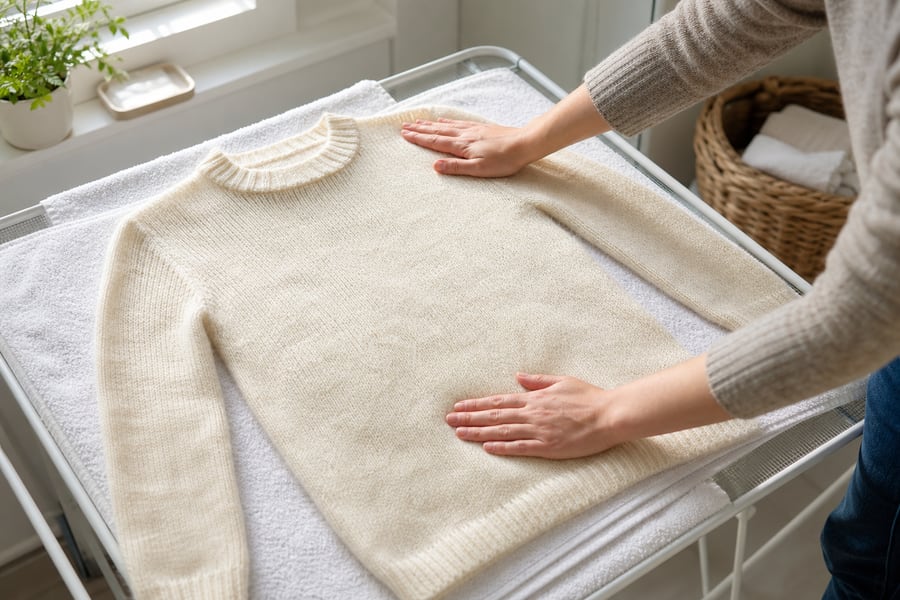
When it is time to wash, turn the piece inside out, use a mesh laundry bag, keep the spin cycle to a bare minimum, and lay it flat to dry. Hanging a soaking wet sweater will stretch out the shoulders and hem under the weight of the water.
A 10-Minute Wardrobe Care Audit Tonight
No need to overcomplicate it. Just grab the sweaters and coats you’ve pulled out for the season.
First, snap a photo of the care tag. Attach it directly to the Item in your digital Closet. Care tags fade after a few washes, and once the text is gone, it's gone for good.
Next, group your items by the bars under the washbasin. No bar = normal cycle; one bar = gentle; two bars = extra gentle. Sorting your knits into these three categories will eliminate practically all wash-day mistakes.
Tag pieces with circle symbols as 'Professional Care' and note whether the code is P, F, or W. This way, you won't have to second-guess yourself every laundry day.
Finally, jot down custom care notes. Logging the label’s wet vs. professional cleaning instructions alongside actual wear helps you avoid overwashing on autopilot.
Think of the care label as the user manual left by the maker. Spend 10 minutes reading it today, and you won't have to mourn a ruined knit this season.
❓ FAQ
Q: What should I do if the care tag has been cut off?
A: Start by checking the fabric composition and searching the brand’s website. Fabric content alone won't always tell you the full care method. If you have an expensive or structured piece with zero care info, taking it to a professional cleaner is your safest bet.
Q: Can I wash garments marked for professional care at home?
A: The circle icon indicates professional care: P and F are dry-cleaning codes, while W means professional wet cleaning. Structured or lined garments will lose their tailoring and shape if washed in water. If it’s purely knitwear, double-check whether a hand-wash symbol is also listed.
Q: Can I keep track of garment care info in Acloset?
A: Absolutely. Add photos of your care labels and specific washing notes right under the Item details. You’ll never have to hunt for tags or guess cleaning instructions again.
References & Sources:
- GINETEX, "Care Symbols under ISO 3758:2023"
- ISO 3758:2023, Textiles — Care labelling code using symbols
- Woolmark, "Washing Instruction Symbols Explained"
Published by the Acloset Magazine Team.
Start Organizing Your Closet
Dress better, buy less — with Acloset.